
Soil is wherecarbon stays.
Biochar that locks away CO₂ also holds water and nutrients, so the same tonne that earns a credit can make a field more productive.
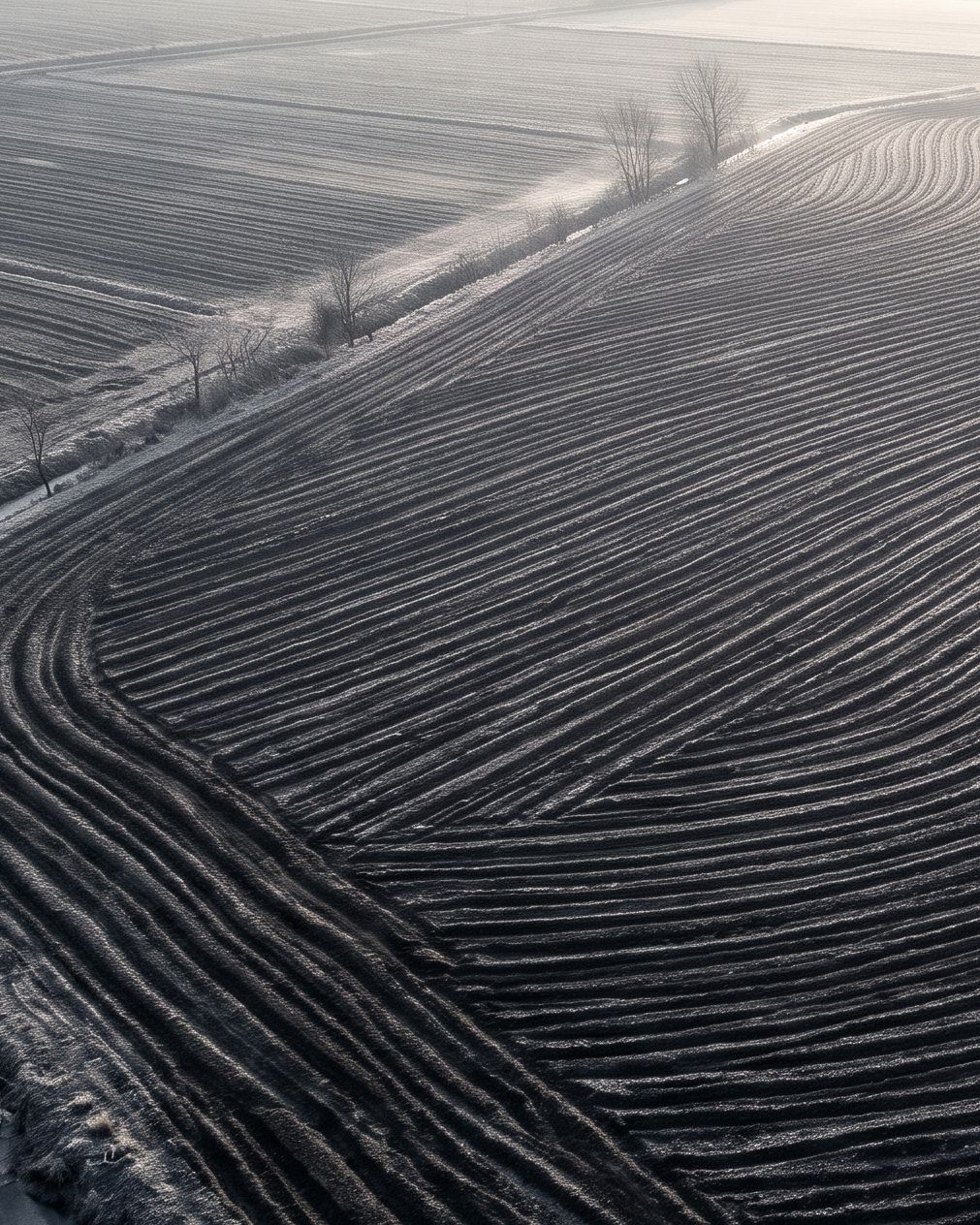
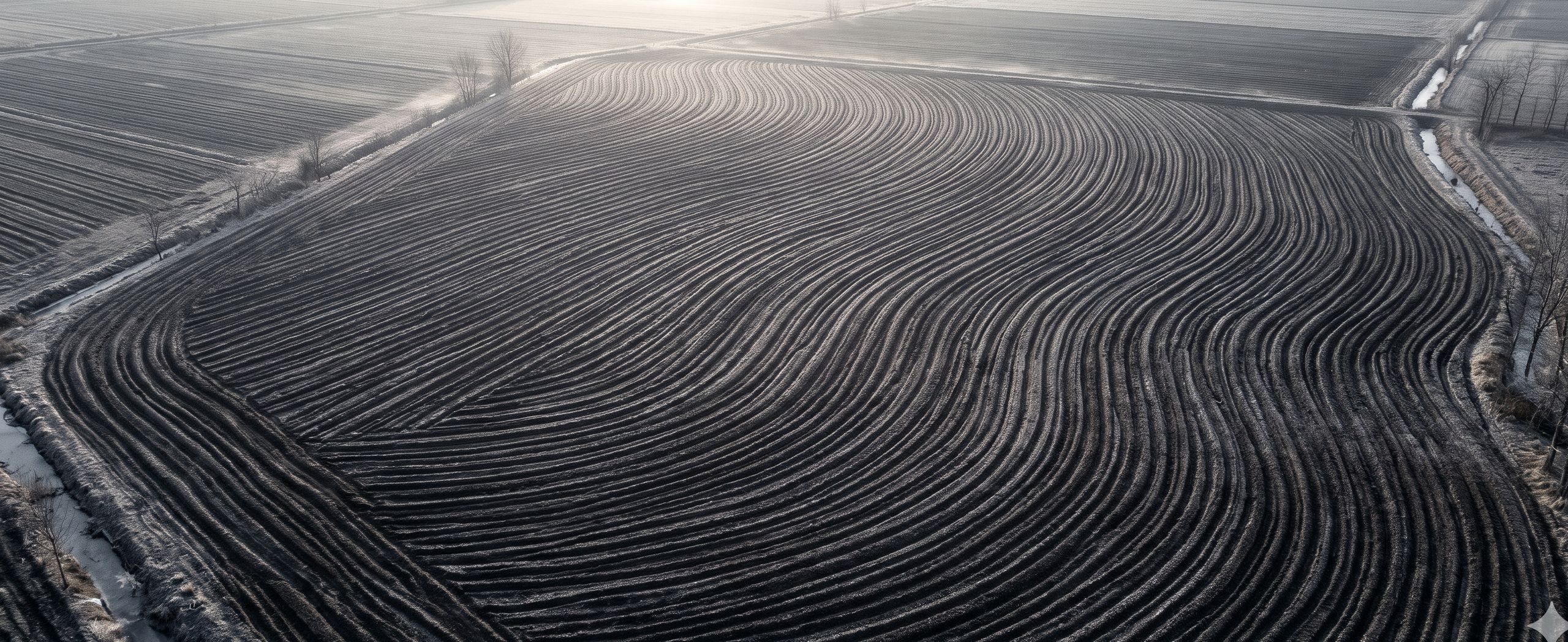 Farmland after biochar placement · Anhui
(01) Why soil
Every grain of biochar 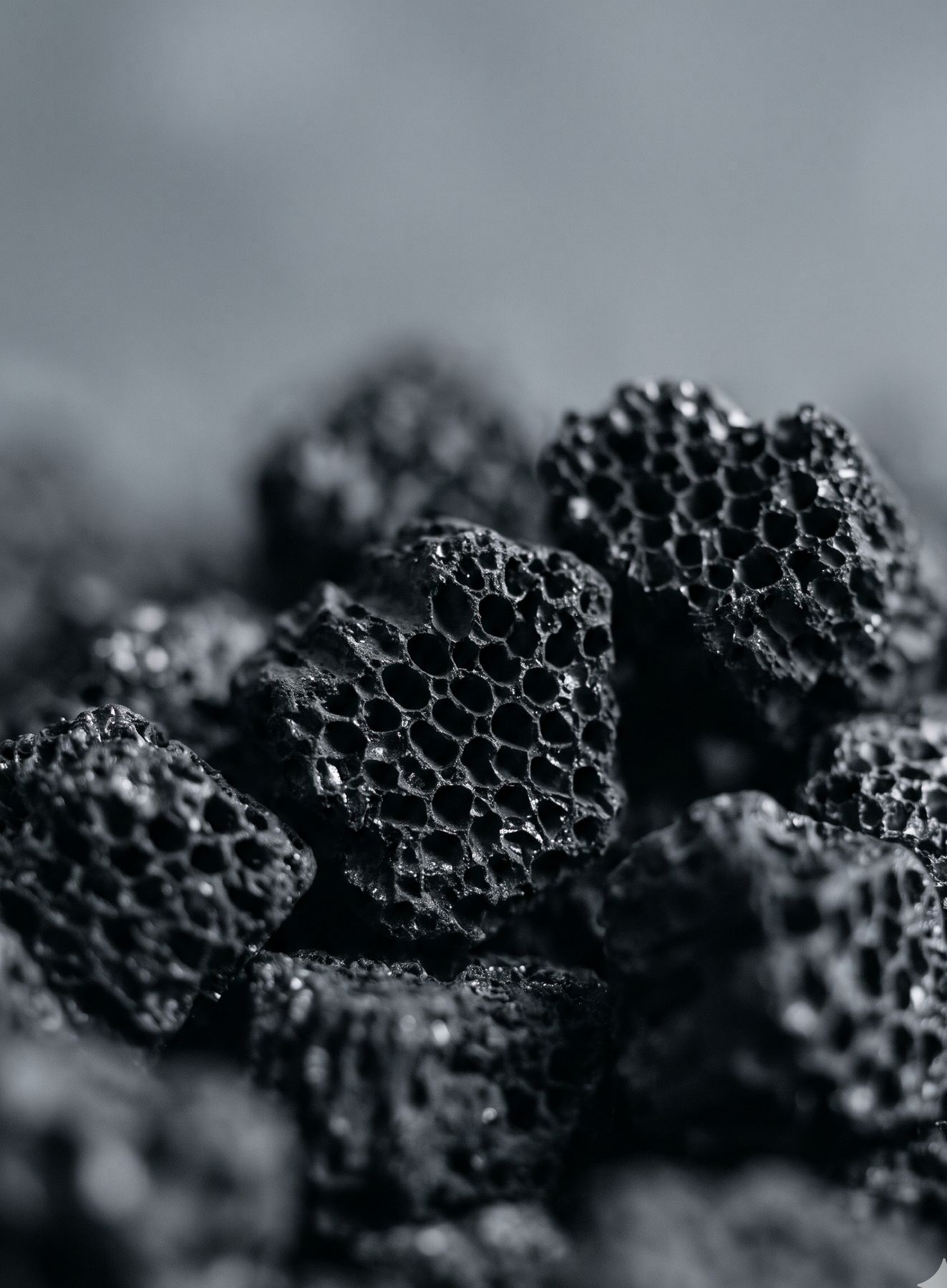 is a small sponge with a very large surface. It holds water
 , feeds soil life and keeps nutrients near the roots
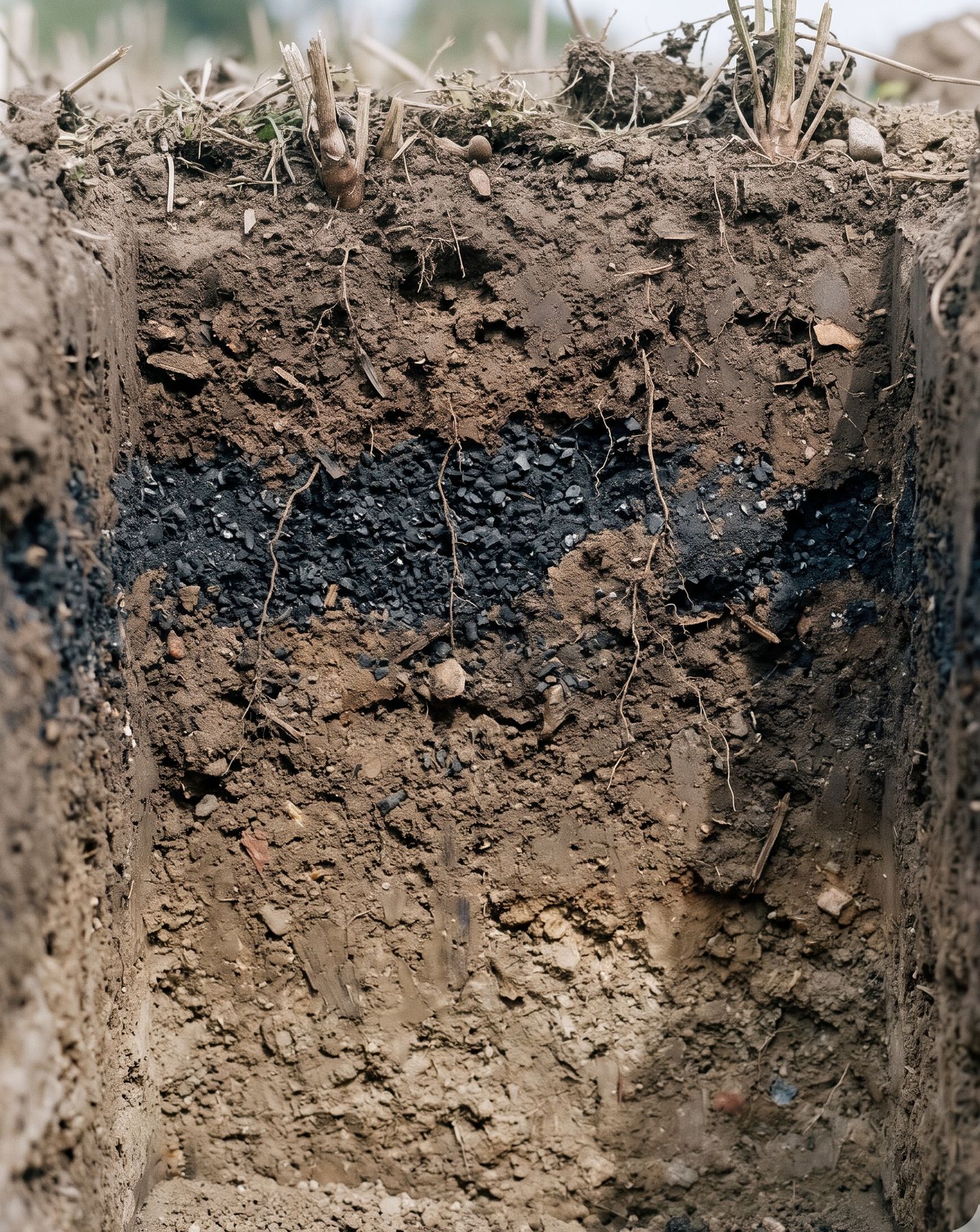 , while the carbon inside it stays put.
More from less
Porous biochar carries nutrients and releases them slowly. Less fertilizer is washed away by rain, more reaches the crop, and fields cope better with dry spells and heavy downpours alike.
Carbon that stays
The same condensed carbon that helps the soil is the carbon we count. Every tonne placed in a field is measured in the lab and logged with its region and month of application.
Healthier ground
After decades of intensive use, many Chinese fields are acidic or salty. Biochar lifts pH, improves structure and gives soil life a home, so degraded land can return to production.
(02) A field in section
What biochar does underground.
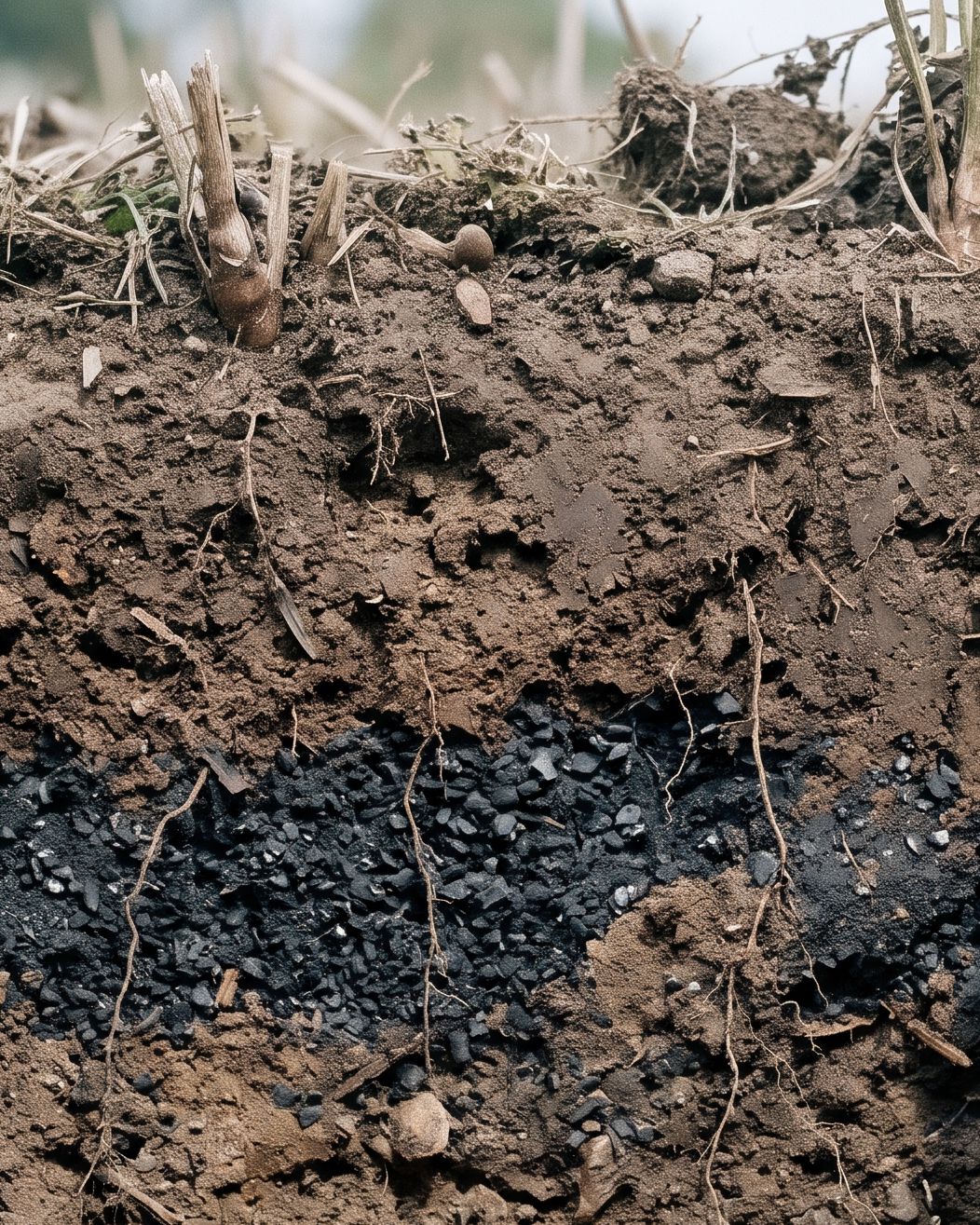
The physical properties that make biochar a stable carbon store also make it useful to a farmer. Here is a field, layer by layer.
Crop and roots
Stronger roots and steadier yields, because water and nutrients stay where the plant can reach them.
Topsoil holds water
Biochar pores store moisture and release it slowly, which helps crops through dry spells and cuts irrigation.
The biochar band
The carbon store itself. Condensed carbon that microbes cannot easily break down, measured and verified per batch.
Nutrients and microbes
A large charged surface binds nutrients and shelters beneficial bacteria and fungi, so less fertilizer washes into rivers and lakes.
Balanced acidity
Alkaline biochar lifts the pH of acidic soils, where many Chinese fields have drifted after years of heavy nitrogen use.
(03) Four product lines
From the field to the balcony.
Each line brings biochar into soil and keeps the removal record intact.
Biochar fertilizer
We blend biochar with organic fertilizer into efficient, low-carbon products. The porous carbon carries nutrients and releases them slowly, so less is washed out and more reaches the crop. From 2028 we plan to supply pure biochar and blends to fertilizer companies.
Biochar-grown rice
We grow green crops with biochar fertilizer, starting with healthy rice. Biochar improves how paddy soil holds nutrients and can reduce the uptake of unwanted metals, which suits demanding export markets.
Balcony potting mix
Our biochar-based potting mix holds moisture longer and gives roots an airy structure in small containers. We are testing blends for leafy greens, herbs and small fruiting plants with urban growers and garden retailers.
Soil remediation
Large areas of Chinese farmland suffer from acidification and salinization. Biochar raises pH, improves structure and helps flush salts below the root zone. We work with local governments and industrial parks to restore degraded land.
(04) Field trials
Proof, season by season.
Before a fertilizer company commits to a blend, we test it with them on real farmland and share every result.
Side-by-side plots
Each trial compares a biochar blend with the farmer's usual fertilizer on neighbouring plots, under the same crop, water and weather.
What we record
Yield, soil pH, organic matter and nutrient levels at planting and harvest, so the effect on the field can be seen in numbers.
Specification and supply
When a blend performs, we agree its specification with the partner and schedule supply, with every tonne still counted in the removal record.
(05) Roadmap
Three phases, built in order.
Carbon credits. Biochar placement generates the data needed for issuance and buyer delivery. This phase builds the delivery record everything else depends on.
Fertilizer companies. Pure biochar and conventional blends add physical product revenue, sold to fertilizer companies on agreed specifications.
Premium fertilizer. A direct sales product for growers, launched after safety testing and local clearance, with regional demonstration sites.